
The Invisible Pollution in Our Bodies and Homes
When we think about pollution, we often picture smokestacks, oil spills, or overflowing landfills. But some of the most pervasive pollutants on the planet are microscopic—and they’re already inside many of us. Microplastics, tiny plastic particles less than 5 millimeters in size, have infiltrated nearly every corner of the Earth: our oceans, food, air, water, and even our bodies.
What started as a distant environmental concern is now becoming a personal one. Scientists have recently detected microplastics in human blood, lungs, breast milk, and even placentas. The unsettling reality is that we’re not just living in a plastic-filled world—we’re absorbing it too.
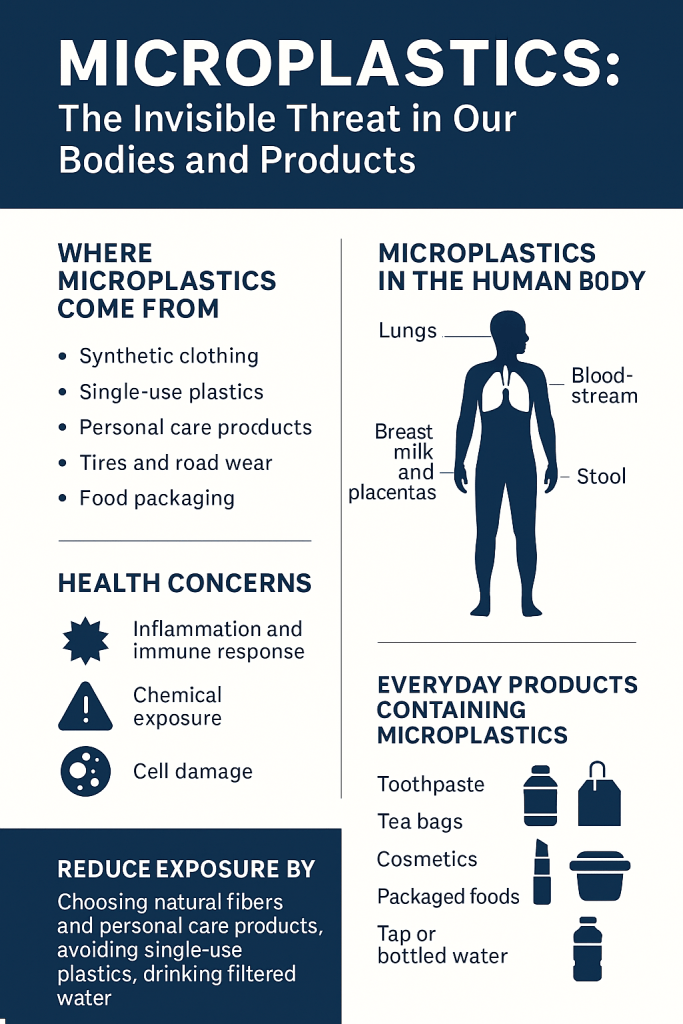
Where Microplastics Come From
Microplastics are either primary (manufactured to be tiny, like microbeads in scrubs or glitter) or secondary (broken down from larger plastic items over time). They originate from a wide range of sources:
- Synthetic clothing: Every time we wash items made of polyester, nylon, or acrylic, tiny fibers shed and drain into water systems.
- Single-use plastics: Bottles, packaging, and bags slowly degrade into micro-sized particles.
- Personal care products: Some toothpastes, facial scrubs, and cosmetics contain plastic microbeads (although banned in several countries).
- Tires and road wear: As vehicles move, tiny particles wear off tires and road markings and are carried by rain into waterways.
- Food packaging: Heat and friction can cause plastics from wrappers or containers to shed into what we eat and drink.
Over time, these particles travel through water systems, accumulate in soil, and are absorbed by wildlife. They’re now found in sea salt, bottled water, honey, fruits, vegetables, and even in the air we breathe indoors.
Microplastics in the Human Body
Recent studies have detected microplastics in:
- Human lungs: Particles inhaled from household dust or synthetic fibers.
- Bloodstreams: Tiny particles have been found circulating in the blood, potentially carried to organs.
- Breast milk and placentas: Raising concern about exposure to infants during the earliest stages of life.
- Stool samples: Confirming ingestion from food and drink.
While the long-term health impacts are still being researched, early concerns include:
- Inflammation and immune response: Microplastics may trigger immune activity or chronic inflammation.
- Chemical exposure: Many plastics contain or absorb harmful chemicals like BPA, phthalates, or heavy metals, which can disrupt hormones or impact fertility.
- Cell damage: Lab studies show that some microplastics can damage human cells or interfere with how cells function.
It’s important to note that not all plastic particles behave the same way in the body, and more research is needed to understand the full picture. But what is clear is that our exposure is widespread—and growing.
Everyday Products That Add to the Problem
We interact with microplastic sources daily, often without realizing it:
- Toothpaste and mouthwash (non-natural types may still contain microplastics or synthetic polymers)
- Synthetic tea bags that shed particles when exposed to hot water
- Cosmetics like exfoliants, lipsticks, and mascaras
- Packaged foods that sit in plastic containers or are wrapped in plastic film
- Laundry: Synthetic fabrics like fleece or leggings can release hundreds of thousands of fibers per wash
- Tap water and bottled water: Both have been found to contain varying levels of microplastic contamination
Even our indoor air contains microplastic dust, often from carpets, furniture, clothing, and electronics.
What Can We Do About It?
The microplastic problem won’t be solved overnight, but small changes can reduce your exposure:
- Switch to natural fiber clothing like cotton, linen, or wool, and use a filter bag (e.g., Guppyfriend) when washing synthetics.
- Avoid single-use plastics and opt for glass, stainless steel, or silicone for storage and food prep.
- Choose natural personal care products without synthetic beads or unnecessary polymers.
- Vacuum and dust regularly to reduce airborne particles indoors.
- Drink filtered water from a reliable source to minimize microplastic ingestion.
On a larger scale, policy changes banning microbeads and encouraging sustainable packaging are already in motion. But continued pressure on manufacturers—and more research into the long-term health effects—is needed.
A Future with Less Plastic Inside Us
The rise of microplastics in our bodies is a modern consequence of decades of unchecked plastic use. And while we can’t eliminate them entirely today, awareness is the first step toward action.
Reducing plastic pollution isn’t just about cleaning up the oceans—it’s about protecting our health, our food systems, and future generations from living in (and absorbing) a world built on disposable convenience. The invisible problem is finally visible, and it’s time we start cleaning up not just our environment, but ourselves.
 Jonåssen