
The Sweetener with a Healthy Twist
In the evolving landscape of nutrition and health-conscious eating, natural sugar alternatives have gained significant attention. Among them, xylitol stands out not just for its pleasant sweetness but also for its unique health benefits. Derived from plants and structurally similar to sugar, xylitol has found its way into everything from chewing gum to toothpaste — and for good reason.
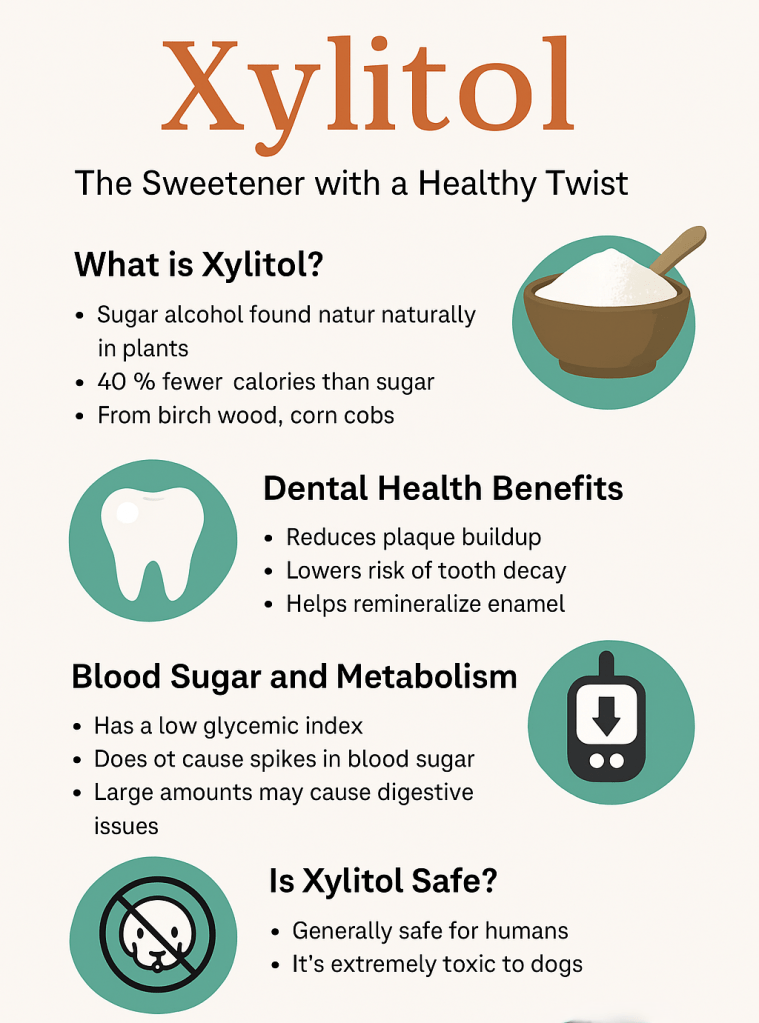
What is Xylitol?
Xylitol is a sugar alcohol, a type of carbohydrate that mimics the sweetness of sugar but has fewer calories and a lower glycemic impact. It naturally occurs in small amounts in fruits and vegetables, including berries, oats, and mushrooms. Commercially, it’s often extracted from birch trees or corn cobs and processed into a crystalline form that looks and tastes like table sugar.
While it contains about 40% fewer calories than regular sugar — approximately 2.4 calories per gram compared to sugar’s 4 — xylitol offers more than just calorie reduction. It has a low glycemic index (GI of 7), making it an ideal sweetener for people with diabetes or those monitoring blood sugar levels.
Dental Health Benefits
Xylitol is perhaps best known for its significant impact on oral health. Unlike sugar, which feeds the bacteria responsible for cavities, xylitol inhibits their growth. When these bacteria attempt to metabolize xylitol, they fail to produce the acid that erodes tooth enamel. Over time, this leads to:
- Reduced plaque buildup
- Lower risk of tooth decay
- Remineralization of enamel
Numerous studies have confirmed these benefits, prompting dentists to recommend xylitol-sweetened gum, mints, or mouthwash as part of a daily dental hygiene routine.
Blood Sugar and Metabolism
Xylitol has a minimal effect on blood sugar and insulin, which makes it an excellent choice for people with type 2 diabetes, prediabetes, or those following a low-carb or ketogenic diet. Unlike artificial sweeteners, which can sometimes affect insulin response or gut microbiota, xylitol is metabolized slowly and does not cause sudden spikes in blood glucose levels.
However, moderation is key. Consuming large quantities may lead to digestive discomfort such as bloating or diarrhea, particularly in people unaccustomed to sugar alcohols.
Other Uses and Benefits
Beyond dental health and blood sugar control, xylitol has shown antibacterial properties that may benefit other areas of health. Some research suggests it can help reduce the incidence of ear infections (especially in children), likely due to its ability to inhibit the growth of bacteria in the mouth and nasal passages.
In the realm of skincare, xylitol has moisturizing properties and is occasionally included in lotions and creams to help retain skin hydration.
Is Xylitol Safe?
For humans, xylitol is generally recognized as safe (GRAS) by the FDA. However, it’s extremely toxic to dogs. Even small amounts can cause insulin spikes leading to hypoglycemia (low blood sugar), seizures, liver failure, or even death in canines. Pet owners must be vigilant and keep xylitol-containing products out of reach.
Final Thoughts
Xylitol is a multi-functional sweetener with a range of health benefits that extend far beyond simply replacing sugar. It offers a naturally derived option for those seeking to reduce sugar intake, protect dental health, and manage blood glucose levels without sacrificing taste.
That said, it’s essential to consume xylitol in moderation and be aware of its effects on digestion and its danger to pets. As more people turn toward health-conscious alternatives, xylitol remains a sweet solution with science-backed benefits and broad appeal.
 Jonåssen